
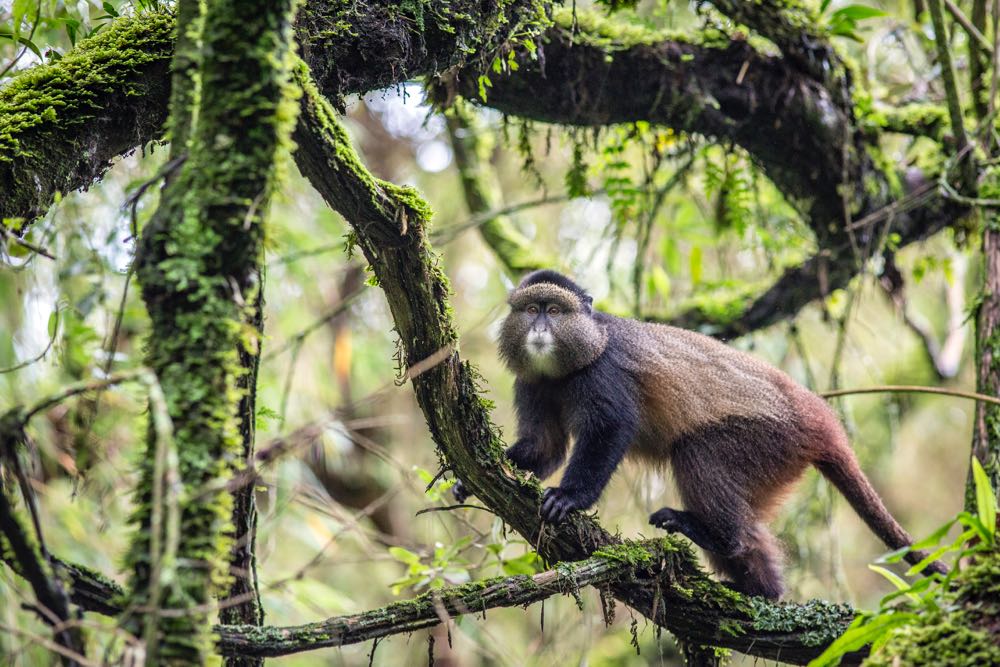
Compared to the gorilla, the golden monkey is a mystery. They share the environment and are also endangered, yet much less research has been done on them.
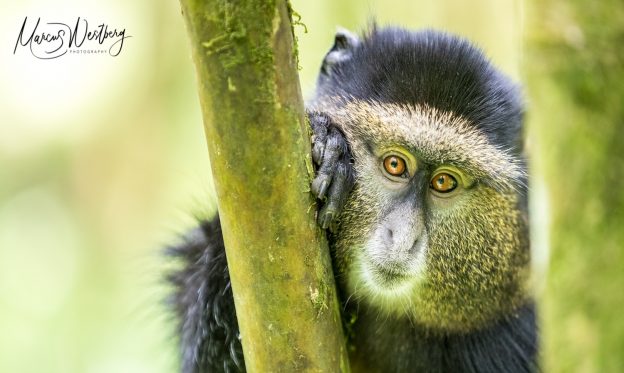
Golden monkeys, a subspecies of Blue Monkey, are endemic to the Virunga Volcanoes. Their lifespan is about 20 years and their population is estimated between 2,000 and 4,000. They are beautiful animals with an orange body and glossy black legs and head. Female colours are more golden and deeper, males look duller and lighter.
Within their bamboo and montane forest habitat that lies between 2,350 and 2,900m (7,710-9,515ft), all levels of the forest and canopy are important. Golden monkeys have forward facing eyes that allow them to focus on a single object and judge depth and distance, a critical ability for life in the bush. They are active by day and do not make night nests; they sleep in groups of four on top of bamboo culms. Sleeping sites are chosen for good shelter against the wind and decent access to the food range.
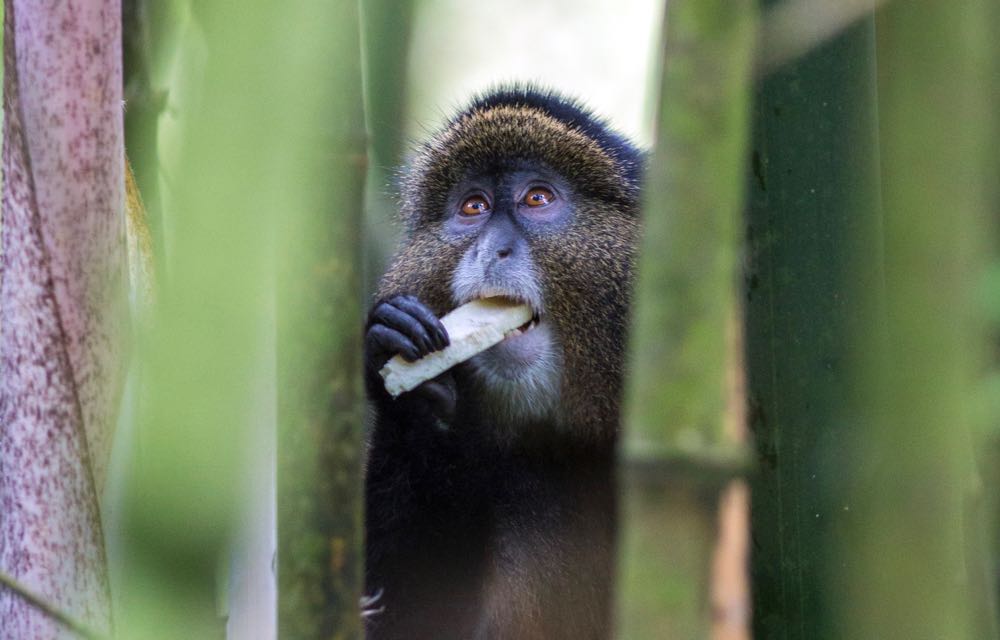
They descend to the forest floor to feed on bamboo shoots whenever they are in season. Golden monkeys also eat tender parts of bamboo and other leaves, fruits and flowers. There are variations between groups; some eat more fruit, others more leaves and flowers. Their intake of dead wood is a likely source of dietary sodium. Pregnant and lactating females sometimes consume insects. Golden monkeys have cheek pouches for food storage and opposable thumbs for better food manipulation.
A dominant male determines where the troop feeds, sleeps, rests; he is in charge for 1 to 8 years. There is a hierarchy among the females who all remain in their natal troop. On the move, females are first, followed by their offspring, while the male is at the rear. They communicate through a range of vocalisations, facial expressions and body language that scientists are still attempting to decipher.

Mating and births coincide with the rains and food availability. It is the females that solicit for male attention. The dominant male allows lone males to temporarily join and mate with females, thus widening genetic diversity within the troop. Mothers carry their infants on the belly and juveniles on the back. They have the lowest infant-to-female ratio of the eight monkey subspecies but it is unknown whether this is due to their evolution or a response to nutritional stress caused by disturbance and habitat loss.
Golden monkeys’ predators are crowned eagles and golden cats but the biggest threat comes from humans who illegally cut bamboo.
photo: Jiro Ose
Our Stories About Golden Monkeys:
-
Mt Gahinga, the Volcano for Families & Beginners
If there’s a neglected child in the Virunga family of volcanoes, it’s Mt Gahinga. This “pile of stones” — as its name translates — is an ancient offshoot of Mt Muhabura, dating back some 100,000 years. At 3,474 metres (11,398 feet), it’s a proper mountain by any measure. But Gahinga sees remarkably few hikers. It…
-
Are Rwanda and Uganda Suitable for Travelling with Kids?
Travelling with children anywhere requires a little bit more planning and preparation. A safari with kids is no different, but it is certainly very possible. A trip to the Gorilla Highlands region need not be ruled out or put on hold until kids are older …A visit to Akagera National Park, like many typical safari…
-
The Charm
200mm, f/2,8, 1/400s, ISO1600Though gorillas (and chimpanzees) understandably receive most of the spotlight, the Virungas have some other interesting primate inhabitants too. Among these is the golden monkey (Cercopithecus kandti), found in all three countries. They are endemic to the Gorilla Highlands region, living in the bamboo forests found along the mountains. Because of habitat…
-
Tale of Kachima Reviewed by Mom and Daughter
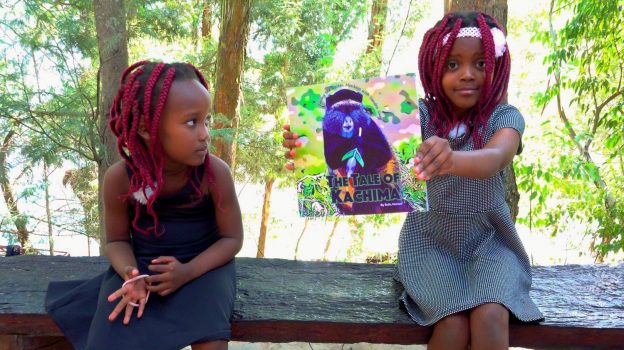
The Tale of Kachima: Saving the Golden Monkeys with Sandra Gray is a fun, adventurous, wildly artistic book that allows the imagination of a child to explore and create possibilities. The book takes us on a journey of a conservationist as she learns the secrets of Mother Nature and its inhabitants, especially the endangered golden monkeys.The book…
-
Golden Monkey Lady
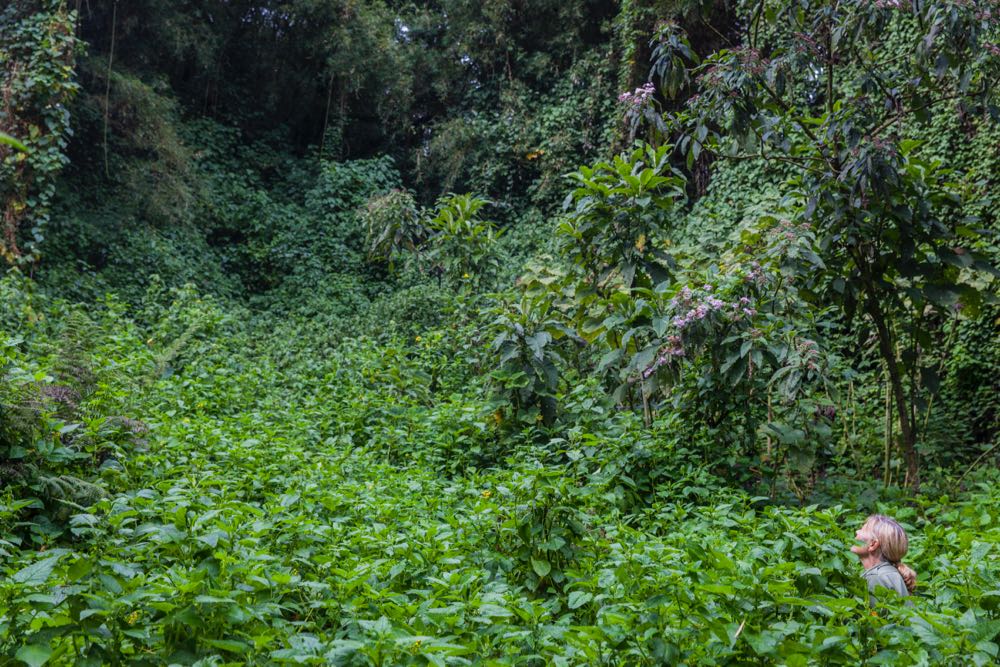
Of the two ways to track golden monkeys in Mgahinga Gorilla National Park, the longer and deeper one exists because of the efforts of Sandra Gray. This former British nurse, now a primatologist, is so passionately committed to her monkeys that she cannot find peace in Europe anymore. Sandra and her team monitor golden monkeys…