

I often get stuck in my crammed little room. It has a bed as big as a football pitch (a headmaster once said), shelves with files and my multi-colour Getting Things Done folders, a wardrobe and a huge table; if your father is an architect you learn to demand one. The walls are brown, waiting patiently and quite possibly hopelessly for me to get enough free time to paint them. A colourful African curtain on a simple glass-less window spices up the brownness on one side. An elegantly framed photo of the Sahara that Enya won at a Kampala photojournalist raffle hangs opposite the window.
I have always been fascinated by people who wake up, get themselves a cup of coffee, do a little small talk and then ask themselves what they will do with their day. Should I call them normal people? I am different. My brain switches on at the same mental place it was last night, and demands to continue.
A little timer at the top of my screen reminds me to stretch my legs every hour (when I remember to turn it on) and there is my daily swim to the other side of the bay. Our staff deliver meals to my room and if I am unlucky they also approach me with some questions. Thankfully the toilets are outside, so I am forced to get out occasionally and take a better view of the gorgeous lake some 10 metres away. The rest is about creating stuff on my 13’’ Retina MacBook Pro that soaks 3G internet from an iPhone 6s Plus.
Especially these days, when I am overwhelmed by the website remake I am putting together, this lifestyle can be disturbing. That’s when visitors help. If they announce themselves. At least 10 minutes in advance. There is nothing I hate more than when a team member climbs the steps to my house to say, for example: “Some Slovenians have come to see you” and I have no clue who they are or why they are here.
The last such case were three students of architecture who intend to build a place for street children in Kabale. My bullshit-meter was in the orange field already; managing outside help is often seen as business in Uganda and there are three particularly popular vulnerable groups an investor would want to have in his aid-zoo:
• street children
• orphans
• Batwa “Pygmies”
Yes, I’ve listed street children first. The smallest group available yet with so many do-gooders and do-gooders that every kiddo should have his own penthouse by now.
Thankfully, the visiting Slovenians were aware of these realities of life. But then they talked about groups of students they were going to bring to Uganda and I had to ask:
“To supervise the project, right? Not to build themselves?”
“To build themselves.”
I had to laugh. I just had to. It wasn’t nice, no, but come on…
Whities coming to Africa to do manual work is one of the most ridiculous ways to “help”. As long as there are locals available, why would you do that? Why take away badly needed job opportunities?
I could potentially keep a straight face if it was only street children or only construction. There are legitimate street children projects—fingers crossed the Slovenians’ project will be one. There are meaningful construction volunteering concepts—we cooperate with one of them. But the combo … that’s too much to take!
Aware that I am talking to three innocents I composed myself and tried my level best to be a nicer conversation partner. They weren’t bad guys, they even gave me a pack of Slovenian coffee at the end.
When I visited Slovenia soon afterwards, I begged Andraž Tarman on the streets of Ljubljana to get involved in the students’ project. Andraž had helped build my Nkozi location, had already cut his teeth and is a highly intelligent man. Hearing that he had been invited to join the project gave me hope.
… I wish 50+ years of development and development in Africa were a true learning experience. With everything available on the internet these days, why repeat mistakes again and again? Why learn from scratch and waste resources?
Anyways, my personal answer to most questions related to Africa’s brighter future is unequivocally: business approaches. Tomorrow I will tell you about a dear visitor who personifies that.
🖋️ text and 📸 photography by:
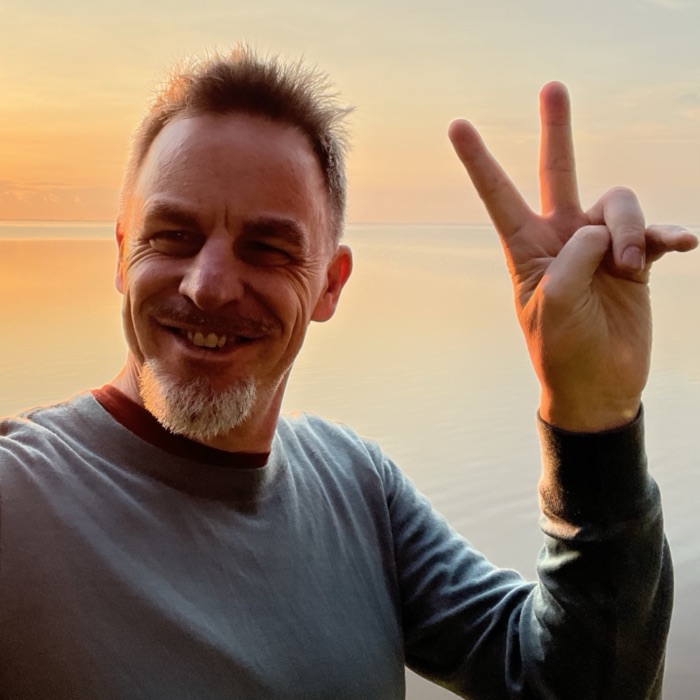
ML Rwebandira is an adventure and cultural tourism expert, writer and multimedia producer who co-founded Gorilla Highlands Experts. Born as Miha Logar, he now combines his initials with “Rwebandira” to honour the Bakiga elder Karwemera, who gave him the name. ML’s most recent publication is the Pocket Treasure. A national of both Uganda and Slovenia, Rwebandira resides with his son Lan in Musanze, Rwanda. Click for his personality-infused quarterly newsletters. [bio updated: 2026-09]
Wish to check out all our 100+ contributors? Dive into the GHE Biosphere to meet everyone who has made us.