
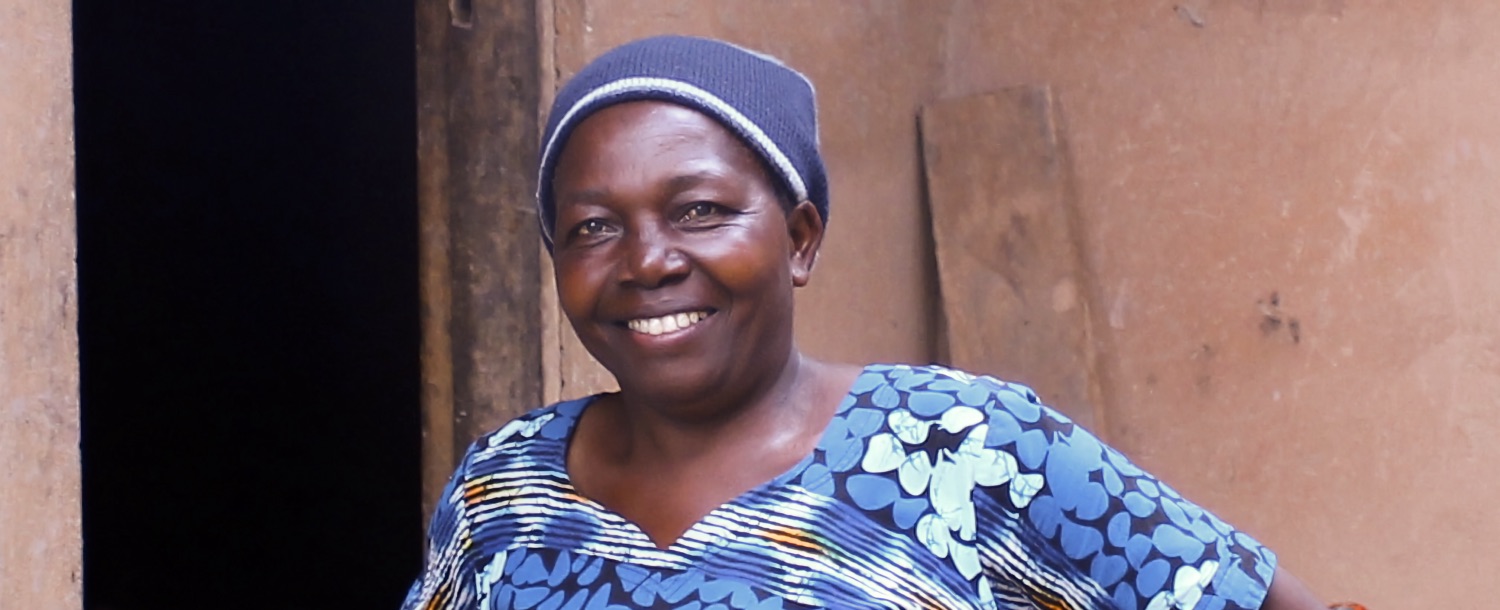
Ask anyone in Bufuka, our little village on a Lake Bunyonyi peninsula, for “Teacher” and you won’t get directions to the primary school. You’ll be pointed to a home filled with laughter, chat, and the smell of obushera, the local brew.
That’s where you’ll find Meble Kyarimpa, a 58-year-old grandmother of five. She’s never stood in front of a blackboard, yet she’s the most beloved teacher in the community, and the nickname fits perfectly. Over the years she’s quietly shown others how to live: how to farm, how to cook, and — most crucially — how to make the obushera.
Originally from Kachwekano atop the hill, she moved to Bufuka after marriage and has been here for 37 years, alongside her husband, an actual former school teacher. When he fell ill, she shut her bar, set farming aside, and devoted herself to caring for him. To keep things going, she started supplying obushera to the shops in nearby Rutinda, a skill passed down from her mother. Selling it from home was the obvious next step.
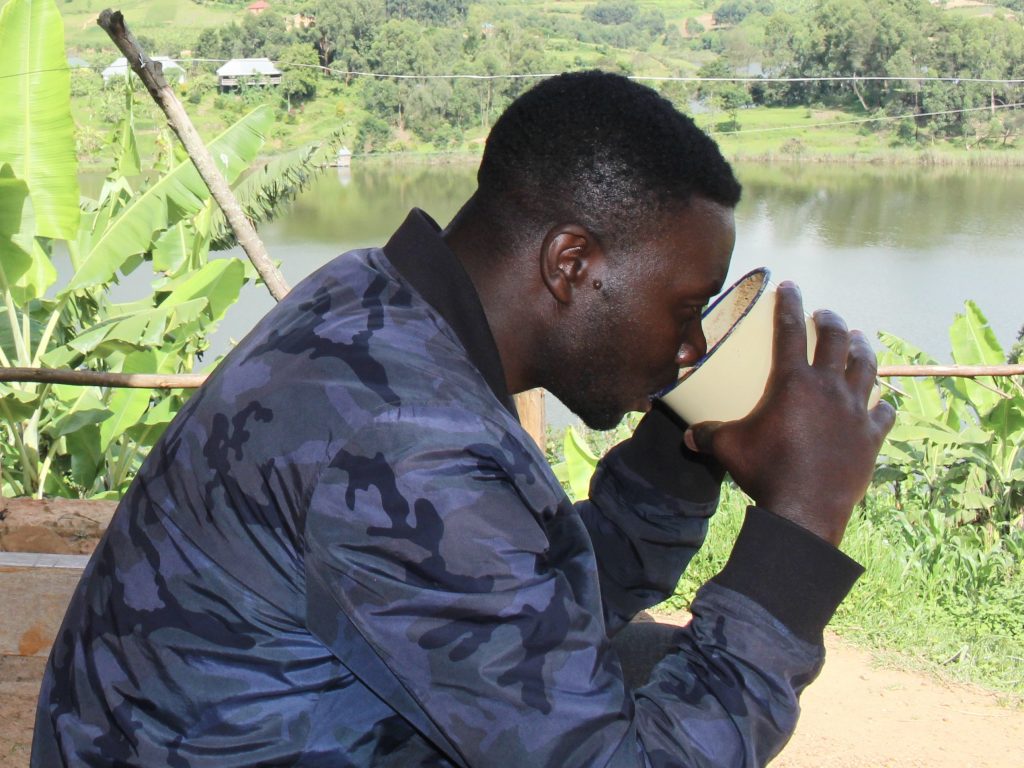
Her compound has become something of a local institution, where Bufukans gather around the metallic cup and drink cold nights away. “I like having people around here,” she says. “It brings business and joy.”
Locals will insist her obushera is the finest around, and they’re not wrong. She uses up to 30 kilos of sorghum per batch, far more than most, which gives it that thick, smooth, deeply satisfying character.
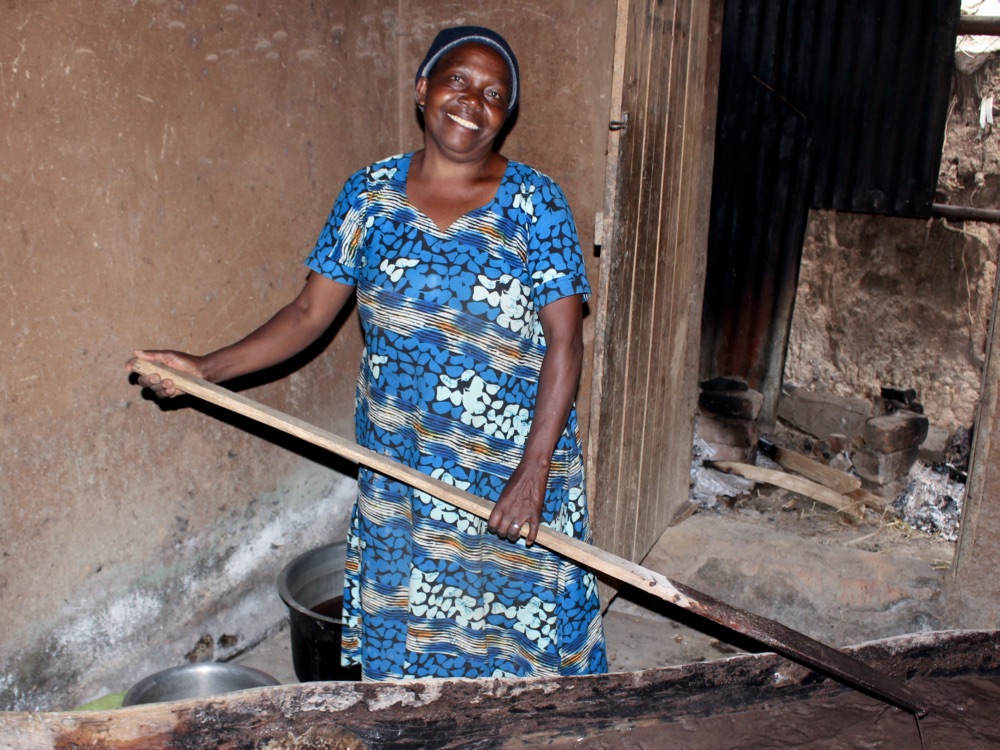
The journey from seed to cup is no small affair: months of growing, days of sprouting under banana leaves, drying in the sun, grinding, and mixing. The latter still follows the traditional Kiga method: a paddle in a small canoe. Teacher prefers her brew slightly fermented, with a gentle sourness to it. She produces fresh batches several times a week.
Over the years she’s watched Bufuka change: sturdier houses, more children in school, more tourists passing through. She sees progress in all of it, but worries the traditional ways are quietly slipping away. Every cup she pours, though, is her small act of keeping the culture alive.
🖋️ text and 📸 photography by:
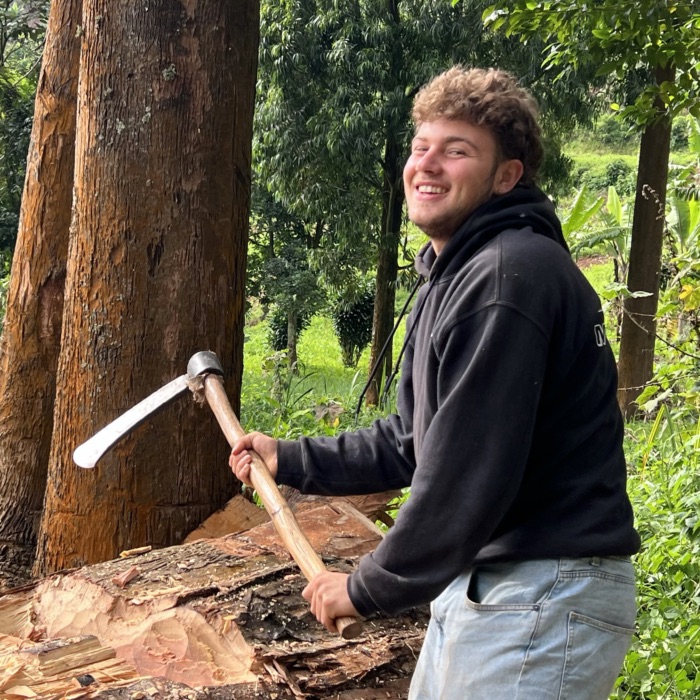
Milan Verdonk was a budget tours creator and article writer at Edirisa on Lake Bunyonyi in 2025–26, on a six-month Gorilla Highlands Experts internship with UCLL from Belgium. Growing up, he played gymnastics and football, and after completing three internships in social work, decided to explore the tourism potential of our region. Inspired by both its stunning nature and welcoming people, Milan will soon be back! In the meantime, you will find him in Lommel, Belgium. [bio updated: 2026-05]
Wish to check out all our 100+ contributors? Dive into the GHE Biosphere to meet everyone who has made us.