

Batwa “Pygmies” are one of the oldest peoples in Africa, and their origin is unknown. For centuries they roamed the forests in bands foraging for honey, wild yams, fruit, stems and tubers, and hunted game with trained dogs. Over time, the forests disappeared under the tools of the Bantu — newcomers from western Africa — and the Batwa numbers dwindled. They bartered hides, meat, honey and yams for arrowheads, salt and crops. The Batwa were feared as soldiers but also famous as dancers and singers.
Traditionally they were monogamous, except when a woman was unable to have children. Prospective husbands were often asked to provide the feathers of a Ruwenzori turaco or a flying squirrel to the future father-in-law as a test of their hunting skills. Bride purchase was believed to promote discord between families, though gifts of honey and wild animal meat were expected.
In the 1980s and 1990s the Batwa were evicted from national parks without compensation. Today they are marginalised and suffer from discrimination, landlessness, poverty, lack of education and health care. However, in recent years the authorities have shown more understanding and some promising progress has been made.
Batwa Activities
Please help us improve the activities section by providing your feedback on the ones you have tried.
“See the Pygmies” is one of the most popular tourism pitches. Please be cautious. There is no lack of unscrupulous people who target tourists wherever Batwa settlements exist. Such “guides” tend to disrespect the Batwa, keep almost all of the money collected and limit the experience to poverty porn and uninspired dancing.
A related problem is Batwa alcoholism. Like any other disenfranchised indigenous group on the planet, they resort to drinking as a way to deal with their situation. Tourism money too often fuels this scourge.
With that in mind, is it even worth visiting the Batwa? It is. Legitimate Batwa projects exist in both Rwanda and Uganda, supporting the poorest of the poor in the Gorilla Highlands region.
Batwa In & Around Bwindi Impenetrable NP /Uganda/
Around Bwindi we can recommend three activities: Batwa Experience in Buhoma, Buniga Forest Walk in Nkuringo and the Batwa Cultural Trail in Nyabaremura (close to Rushaga). They all fall into the category of living history: you will see Batwa dressed in costumes very professionally and at times cheekily recreating their foregone forest lifestyle.
Buhoma Gate
The Batwa Experience in Buhoma is the original Batwa cultural walk. The Batwa Trail in Mgahinga, the Buniga Forest Walk and the Batwa Cultural Trail are heavily inspired by its success, attempting to replicate it with Batwa communities from other parts of the Gorilla Highlands region.
The Batwa Experience happens in a forest bordering on the national park, an area that can be relatively steep. A path in an excellent condition leads from one station to another, showcasing traditional herbalist knowledge, hunting techniques, forest shelters and more. The crescendo is reached at a spacious purposely-built hut that acts as a dance floor and dining area. The dancing includes an elaborately and impressively costumed deity that is quite a scary sight. The food served has little to do with the Batwa forest diet; it is instead a tasty example of what rural Ugandans usually eat: matooke (plantains), goat stew and fruits.
The activity lasts about 5 hours and can be started any time from early morning to early afternoon. Up to 12 guests can go at once; two groups per day can be served.
Click for more information from the official website.
Nkuringo Gate
The Buniga Forest Walk in Nkuringo is an easy loop about 1 kilometre long through a pocket forest known for its many birds; over 100 species have been identified in the area. Buniga Forest harbours numerous mammals, for example duikers, and primates like black and white colobus and mountain monkeys.
A Batwa guide, dressed in a simplified reproduction of the olden forest wear, will try to show you some of the fauna but lush indigenous flora is the only guaranteed part of the walk. Giant lobelias and tree ferns may truly amaze you, in case you haven’t yet set foot in Bwindi.
Together with a team of Batwa actors and actresses, your guide will take you into his people’s past. You will get to understand how the jungle provided them with food, medicine, clothing, construction, tools and crafts. Contemporary crafts will be on offer at the end of your stroll, which may take 2-3 hours.
If you wish, you can finally be taken to the Sanuriiro settlement some 5 kilometres away, to see how Batwa survive today.
Rushaga Gate
The Batwa Cultural Trail in Nyabaremura is similar in concept and execution to the two activities above; a visitor enters the forest in the company of the Batwa and a ranger.
Batwa in Mgahinga Gorilla NP /Uganda/
The Batwa Trail in Mgahinga is available in a shorter and longer version. The price and the activities are the same; the only difference is the length of the walk across the lower slopes of Mt Muhavura and Gahinga (on average 2.5 versus 5 hours). The trail is well-maintained and, if you opt for the short option, very flat.
Batwa performers in imitation of traditional wear will show you the forest as a larder, pharmacy, builder’s yard, tool kit and, above all, a home. Along the trail you’ll try to fire a bow and arrow, check hives for wild honey, help repair a Batwa shelter, harvest plants for medicine and food, light a fire without matches, listen to legends and learn about Batwa culture and traditions. The highlight of the trail is a descent into Garama Cave, a historical hiding place 342m/1,120ft long. It provides the setting for an unforgettable dancing and singing performance.
Batwa Near Echuya Forest Reserve /Uganda/
Developed to focus on the present, Batwa Today combines a nature walk in Echuya Forest Reserve with a visit to the Batwa community of Rwamahano. The latter is based on respectful conversation — guests are expected to introduce themselves to the Batwa, get to know them, and ask and answer questions in a relaxed group atmosphere. There is also a pre-activity session at Lake Bunyonyi and debriefing afterwards; Batwa Today is deeper than other Batwa experiences in the Gorilla Highlands.
The longer version of the Batwa-led forest walk can take up to 2 hours, is of easy to moderate difficulty and leads to the sacred place where Batwa used to slaughter the animals they hunted. The much shorter loop (30-45 minutes) is meant only for visitors who have trouble walking.
Click for more information from the official website.
Batwa at Lake Bunyonyi /Uganda/
If you are interested in a motorboat trip in the Lake Bunyonyi area, consider the Batwa Feast. This brand new offer combines a good time with the Batwa, a little museum and a meal at an extraordinary household.
Click for more information from the official website.
Batwa on the Congo Nile Trail /Rwanda/
Due to Rwanda’s historical complexities, it is more difficult to find experiences with the Batwa. However, near Rubona on the shores of Lake Kivu you can get a taste of their ancient culture.
featured photo: visit to the Batwa of Rwamahano (Echuya FR) by Marcus Westberg
Our Stories About the Batwa:
-

People, People, People: Gorilla Highlands Bootcamp 2017
They proved to be the toughest of the 20 participants from 7 countries…
-

People of the Gorilla Highlands Are Characters
Before my arrival to volunteer in Rwanda and Uganda there seemed to be one phrase that I was told that hung over me: The people of the Gorilla Highlands are characters. I didn’t know quite what this meant at the time, but now this one statement has defined my experience. And so, the only way I can…
-

Total Surprise
Something extraordinary happened to me last week, quite possibly due to this personal blog I began to write, exposing myself in the process. I went to Rwanda to collect a bunch of Dutch business people, 7 entrepreneurs successful enough to be members of EO, a global peer-to-peer network that connects owners and founders of companies grossing…
-
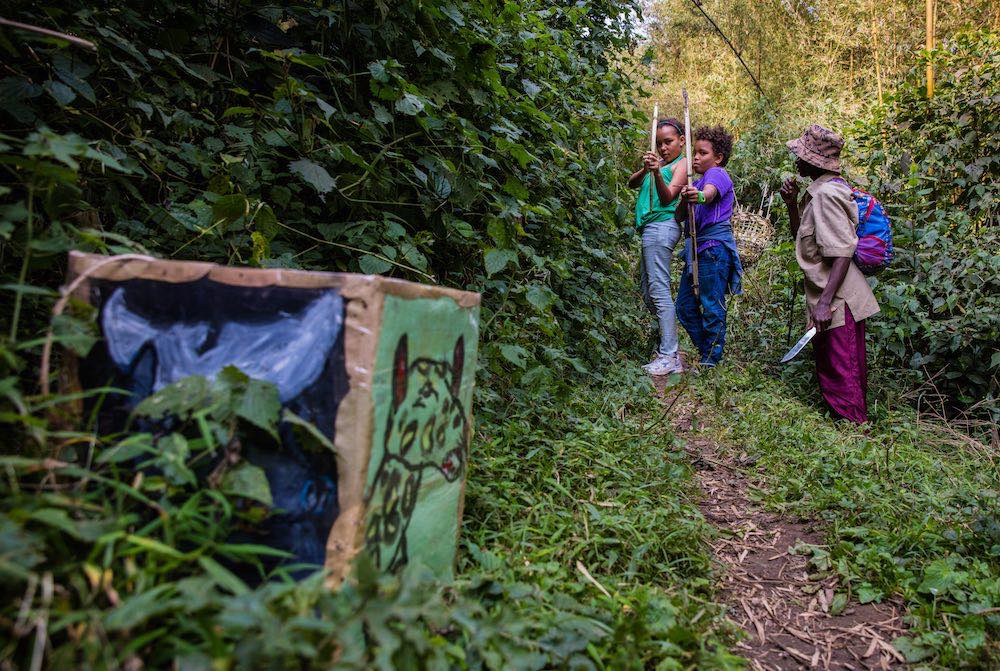
WARNING: Shooting Is for Kids Only
Watsup world it’s me, the one and only ENYAAAAAAAA with my third Enya’s Blog post. I just finished school so that means I’m spending my summer in the GORILLA HIGHLANDS. Let me get you through why I am at Lake Bunyonyi this time of the year… My bother Maani and I usually go to SLOVENIA…
-

“Responsible Tourism” – Right Term, Right Way
There is nobody with a tourism degree on the Gorilla Highlands team, nor has anybody worked in the tourism industry beforehand. Our decision to enter this business was purely pragmatic. We noticed negative long-term effects of charity and looked for something smarter. We were enchanted with our region’s natural and cultural beauty. We felt that the best way…
-

Background Story: Batwa “Pygmies” for Children
Wim Kok of Matoke Tours is well known for his creative ideas. Thinking of family travel in Uganda, he wondered how to engage children under 15 who are not allowed to track gorillas. Before his involvement with Matoke, Wim was a tour guide for another Dutch company. He guided tours all over the world, but…
-

Focus on Batwa “Pygmies”
We always start the year with a meeting solely devoted to our partnership with Batwa “Pygmies”. Making sure local communities benefit from tourism is central to the Gorilla Highlands initiative and the Batwa are the poorest of the poor. At these annual meetings we discuss what activities can be offered to visitors and how much Batwa are…