
Tag: Volcanoes NP /Rwanda/
area: 160 km2/62 mi2
Located in northern Rwanda just a couple of hours away from Kigali, Volcanoes National Park is the most approachable mountain gorilla park in the Gorilla Highlands region. It shares three volcanoes with Uganda’s Mgahinga — Muhabura (4,127 m/13,540 ft), Gahinga (3,474 m/11,398 ft) and Sabyinyo (3,669 m/11,959 ft) — and two with Congo’s Virunga National Park — Karisimbi (4,507 m/14,787 ft) and Bisoke (3,711 m/12,175 ft).
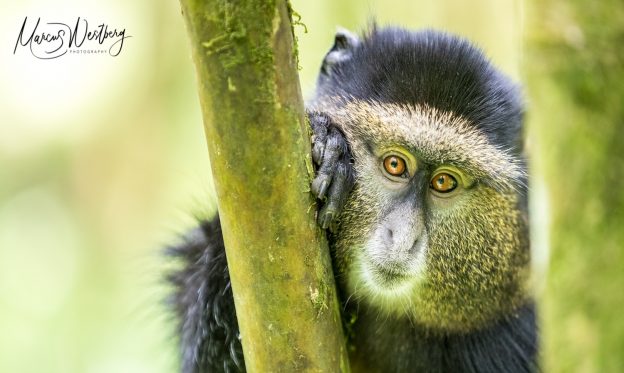
In addition to 12 habituated mountain gorilla groups, the park offers golden monkey tracking and many hiking opportunities. The two-day climb of Mt Karisimbi, the tallest peak of the Virunga volcanoes, is the most challenging while the day-trip to the lake atop Bisoke the most popular option.
For our main Gorilla National Parks page with travel advice please click here.
Our Stories:
-

Can Primate Parachuters Be Responsible Tourists?
If our goal is to make travel in the Gorilla Highlands region more responsible, what do we do with Primate Parachuters? The Primate Parachuter (PP) shall be a provisional term for a tourist who is only interested in seeing mountain gorillas, and maybe chimps. For many PPs, time in Rwanda/Uganda is severely limited, usually because…
-

Do You Know How You Can Visit All the Countries of Our Region at the Same Time?
Mt Sabinyo (or, as our Rwandan brothers call it, Sabyinyo) is the answer! Its highest peak proudly stands at 3,669m/12,037ft, lies in Uganda, Rwanda and DR Congo at the same time, and is absolutely the preferred volcano for hiking in Mgahinga Gorilla National Park. We have previously presented Mt Gahinga and Mt Muhabura with ample…
-

Personal Take: Hikes in Gorilla Parks of Rwanda and Uganda
Marcus’s introduction to our series of walking articles reminded me of my unique position: I must be one of the few who have done (almost) everything in all mountain gorilla parks of Uganda and Rwanda. I am also a lover of walking trips and it’s kinda my duty to share with others like me! Then…
-

Slow and Sweaty Travel
24mm, f/8, 1/250s, ISO800 This week I have the (dis)pleasure of introducing the next level of our August theme, the regional attractions — hiking! I have a love-hate relationship with it. When I’m slogging my way up a particularly tough mountain, cameras and other equipment weighing way too much for my comfort, I do tend…
-

Never Gets Old
70mm, f/5, 1/250s, ISO400 As much as we try to focus on highlights, attractions and activities other than gorilla tracking, this remains — undeniably and deservedly — the region’s top drawcard. I am fortunate enough to have lost count of the number of occasions I have been out with gorillas. My first time wasn’t exactly conventional.…
-
The Charm
200mm, f/2,8, 1/400s, ISO1600 Though gorillas and chimpanzees understandably receive most of the spotlight, the Virungas have some other interesting primate inhabitants too. Among these is the golden monkey (Cercopithecus kandti), found in all three countries. They are endemic to the Gorilla Highlands region, living in the bamboo forests found along the mountains. Because of…
-

The Godfather and the Controversial Martyr of Mountain Gorilla Research
The first scientist to study mountain gorillas full time in the wild was George Schaller. When he reviewed the literature he could find few verifiable facts, largely due to the secretive lifestyle of the gorilla in dense forest and bush. In 1959 he chose a research area in Kabara (DR Congo) because of its more open habitat,…
-

Were Batwa Really Dangerous to Gorillas?
The sad story of the Batwa “Pygmies” of the Gorilla Highlands reached its dramatic peak when they were kicked out of national parks. This was in line with the traditional view of conservation — nature can only be protected in strict separation from indigenous peoples — but was that actually needed? Were they truly dangerous to gorillas? Dian Fossey,…
-
Why Do Gorillas Fart So Much?
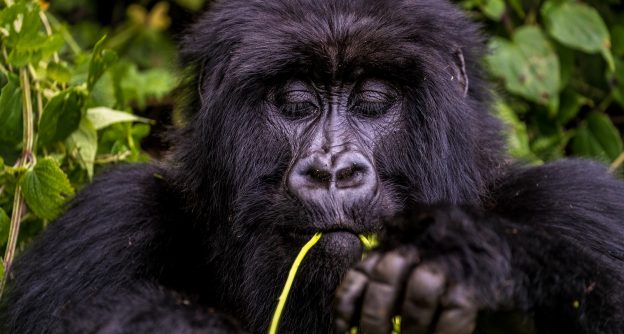
Contrary to old myths about bloodthirsty gorillas hunting humans, mountain gorillas are peaceful vegetarians. What Do Mountain Gorillas Eat? They are herbivores, eating up to 140 different types of fruit, herbs, stems and roots. Like other primates they sometimes munch on ants and termites and have been seen to enjoy a communal meal off a favourite…
Wish to move on to another category?