

Of all the cultures found around the Virungas, the Bafumbira are perhaps the most intriguing. Though they speak a dialect of Kinyarwanda, they live in Uganda’s southwestern corner, in Kisoro District.
Their influence in Uganda far outweighs their numbers. They are a small minority, as there are only around 700,000 Bafumbira in their district while Uganda’s population is nearing 50 million. Yet through determination and a strong focus on science education, many Bafumbira have risen to prominent positions in the country.
The most internationally notorious member is Nsaba Buturo, the former Minister of Ethics and Integrity, known for championing Uganda’s anti-gay legislation. Locally, the most flamboyant figure is “King of Development” Ceasor Mulenga, a businessman famous for throwing money at all sorts of churches, ventures and political candidates — provided you acknowledge his self-declared royalty.
While other Ugandans may label them “Rwandans”, the Bafumbira reject that simplification. They’re proud of their distinct identity. Being on the Ugandan side of the border spared them the horror of Rwanda’s 1994 Genocide against the Tutsi, and so they still speak openly of Tutsi and Hutu backgrounds (a taboo across the border). Having witnessed the value of peace and stability, they tend to be strong supporters of Uganda’s ruling National Resistance Movement (NRM).
Historically, young Bafumbira often attended prestigious secondary schools in other parts of Uganda, where they were surrounded by students from other ethnic groups. To navigate the unfamiliar and sometimes hostile environment, they stuck together tightly. Bullied as “blindly loyal to the NRM” or “backward” due to Kisoro’s remoteness and poverty, they developed a sense of solidarity. Today, with improved education opportunities back home, that is increasingly a thing of the past.
Still, their pride binds them. Even far from the mountains, in the suburbs of Ugandan cities, you’ll find places like Mugifumbira in Kampala’s Kamwokya area (literally “the place of the Bafumbira”).
And lastly, it’s widely said that, like many women from western Uganda and Rwanda, Bafumbira girls are especially pretty — a reputation they carry with confidence.
Interested in stories from in & around the gorilla national parks of Rwanda 🇷🇼, Uganda 🇺🇬 & DR Congo 🇨🇩? Follow us on Instagram or Facebook!
🖋️ text and 📸 photography by:
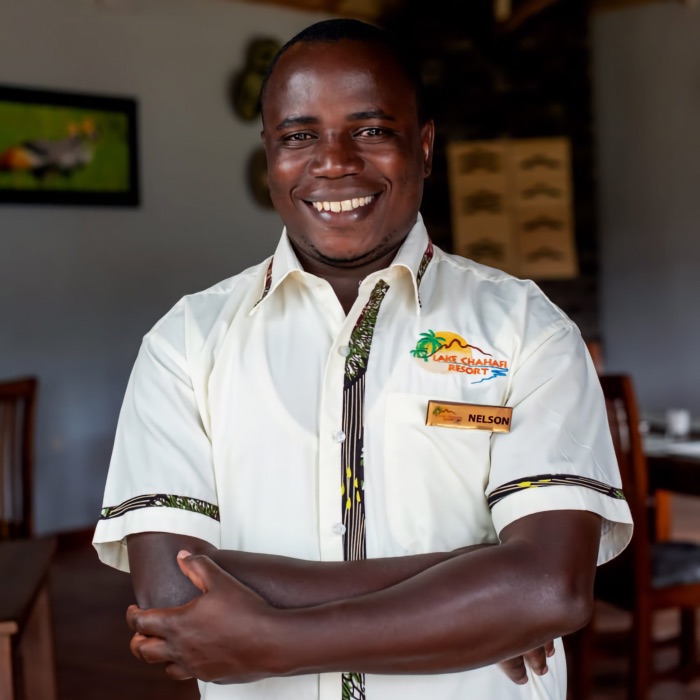
Nelson Mugisha learned about the transboundary region idea way back in 2014, when he was only two years deep into building his Lake Chahafi Resort. He had a vision that went far beyond the resources actually available to develop his father’s farmland — a mindset very close to Gorilla Highlands Experts. From being interviewed about his lake to hosting hikers on multi-day treks, Nelson’s involvement eventually grew to include writing, just as the resort evolved from a campsite to a boutique facility. He retired from his Uganda Revenue Authority service in 2022 and now moves between Chahafi and Kampala, Uganda. [bio updated: 2026-06]
🖋️ text by:

Owen Bright Ahereza was sponsored and trained by Edirisa (more about it in his “Thank You” story) and worked as a tour guide for Gorilla Highlands Experts until January 2026. He lives in Kabale, Uganda. [bio updated: 2026-03]
📸 photography by:

David Esteban is a storyteller and photographer who focuses on human connection, culture and everyday life. He lived in Rwanda in 2019, where he collaborated with Gorilla Highlands Experts and other local initiatives. David is dreaming of coming back and working on two photography books while living in Mendoza, Argentina. [bio updated: 2026-03]
Wish to check out all our 100+ contributors? Dive into the GHE Biosphere to meet everyone who has made us.
Comments
One response to “The Virungas’ Most Intriguing Ethnic Group”
[…] Known all across the Ugandan slopes of the Virungas, this cozy place of mixed German and Bafumbira DNA opened its doors in 2010. After 15 years in the business, it’s currently reinventing […]